

App reviews influence how apps rank in Google Play and the Apple App Store. In this post, we want to share how we worked on the App Store Optimization (ASO) of a fintech client’s application.
How do app reviews influence ranking and downloads?
App reviews influence ranking and downloads in two main ways:
External ASO factors: Reviews are a ranking factor in both Google Play and the Apple App Store. Positive reviews are taken into account by the algorithms of these marketplaces.
Additionally, positive reviews have a “social proof” effect that encourages downloads, as users tend to trust apps with strong ratings and positive feedback. A high number of positive reviews increases the likelihood of downloads because of the trust they generate among users.
Review analysis of a fintech app and its competitors
One of our fintech clients offers a mobile app for its financial products, with versions available on both Google Play and the App Store.
All of our client’s competitors also have their own apps, some of them with a longer track record than ours.
We started this ASO & AI project with three main objectives:
- Analyze our client’s reviews to identify internal areas for improvement.
- Understand our brand perception based on the reviews and identify the distinctive capabilities we generate from our competitive advantages.
- Study the strengths and weaknesses of our client’s competitors’ apps based on their reviews in order to conduct a benchmarking process.
To achieve these goals, we designed the following process:
- Data mining of app reviews from our client and their competitors.
- Analysis of the extracted data.
- Extraction of insights and recommendations.
- Creation of an implementation roadmap to improve our client’s app.
Data mining
The first step in this analysis was data mining, extracting reviews from our client’s app and from their four main competitors.
Naturally, we did not have direct access to competitors’ reviews. We could not access them through their Google or Apple accounts since those profiles are private, so we developed our own program to download them.
Using this proprietary solution, we downloaded a total of 5.8 million reviews from our client’s app and from its four main competitors.
Analysis of the extracted data
Among the extracted data, we identified:
- Complaints related to our client’s app
- Weaknesses of the application
- Strengths of the app highlighted by customers
We performed the same analysis on our competitors’ applications and were able to identify their strengths, weaknesses, and competitive advantages.
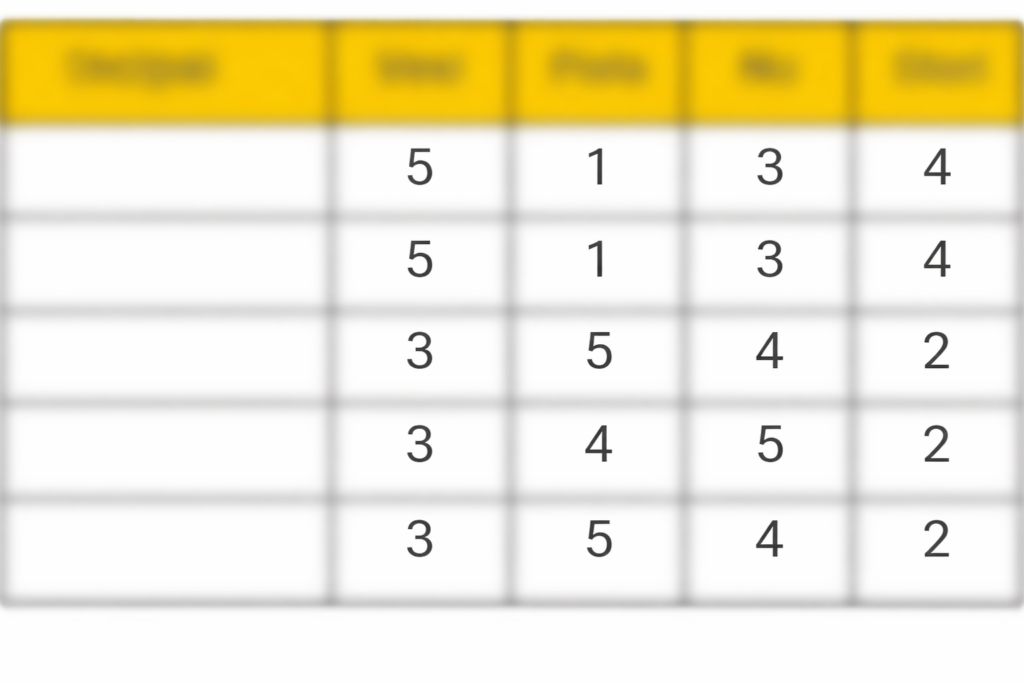
Based on these insights, we selected five key attributes and assigned each one a score from 1 to 5 for each app, based on customer reviews, as shown in the following table:
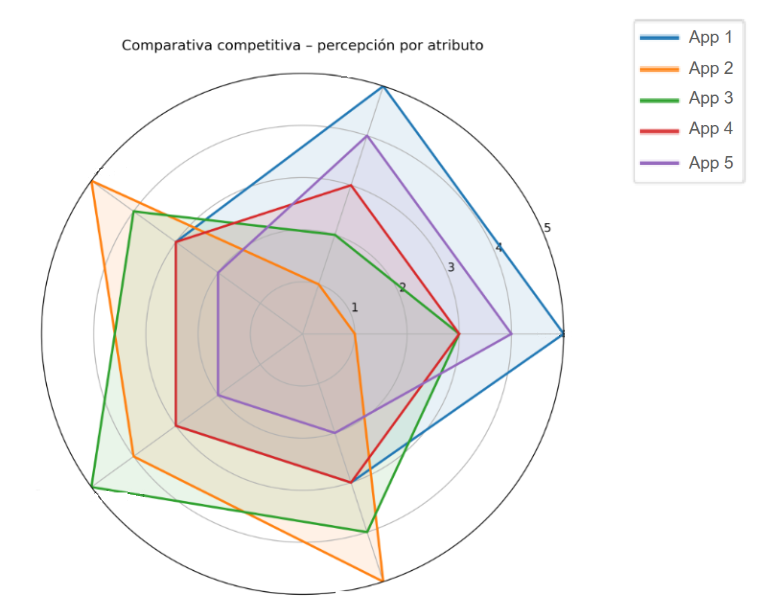
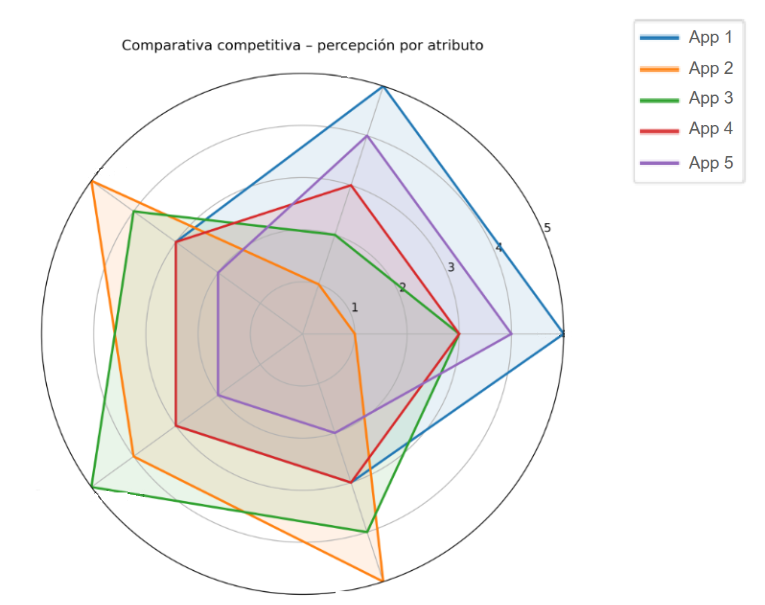
Using this data, we created a Kiviat chart for all the apps, allowing us to visually compare the attributes where we were best positioned and those where improvement opportunities existed.
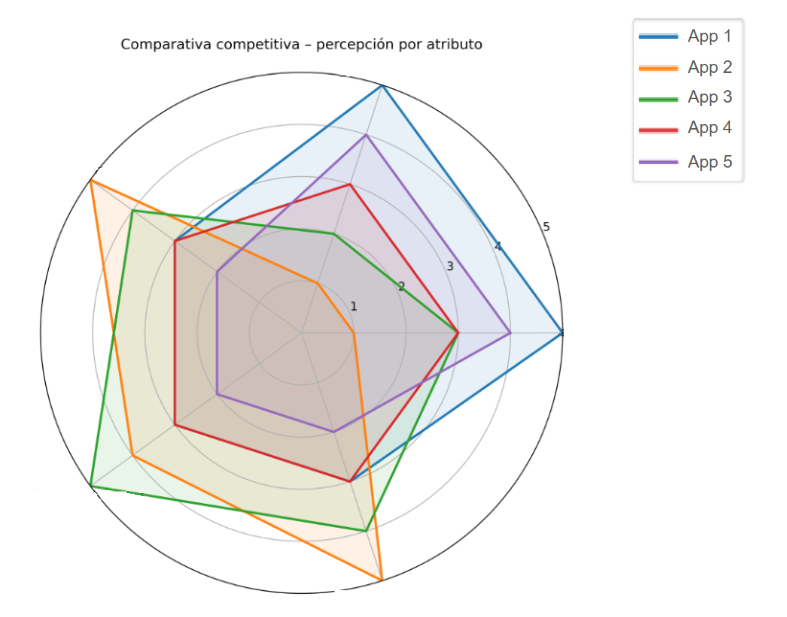
Additionally, we built several buyer personas to support the identification of improvement opportunities.
Extracting conclusions and recommendations
Benchmarking
Both our client and its competitors position themselves in the market through a number of shared attributes.
Thanks to this analysis, we discovered that users of our client’s app did not perceive some of the attributes that we were actively trying to position in the market.
By analyzing our competitors’ reviews, we also found that some of them were successfully positioning themselves around these competitive advantages. We leveraged these learnings and incorporated them into the recommendations provided to our client.
Recommendations
After analyzing the data from our client’s app and its competitors, we developed the following recommendations:
- Customer support
Improve customer support by responding to users more quickly and clearly indicating the status of their requests:
received – under review – responded – resolved.
- Advance communication of account charges
Notify customers in advance about charges that will be applied to their accounts so they can be prepared.
- Improve product delivery
Our client needs to send physical products to users. We identified recurring complaints regarding delivery and shipping times. We recommended reassessing the shipping policy with the service provider responsible for these deliveries.
- Communication of technical issues in the app
Send in-app messages when the IT team detects technical issues so users are informed. These messages should include an estimated resolution time, updates if delays occur, and a final notification when the issue has been resolved.
- Information about user “levels”
User profiles in the app have “levels” based on certain KPIs. Moving up a level provides improved conditions and additional app benefits, such as higher discounts. Through the analysis of user comments, we found that customers wanted to know how close they were to reaching the next level. As a result, we proposed a system to display this progress, showing the current KPI values required to level up and how much remains to reach the next level.
Implementation roadmap
After the client approved the implementation of these recommendations, we evaluated them using an effort/value matrix and designed a roadmap based on the expected impact of these improvements on the app.
The roadmap will begin next March. From Relevant Group, we will share the results achieved as these recommendations are implemented.