

Grazing: the moment before choosing what to watch matters more than it seems
Platforms have been studying it for years. Advertisers are only starting to. And the user, without even realising it, sits at the centre of one of the richest moments in the digital ecosystem.
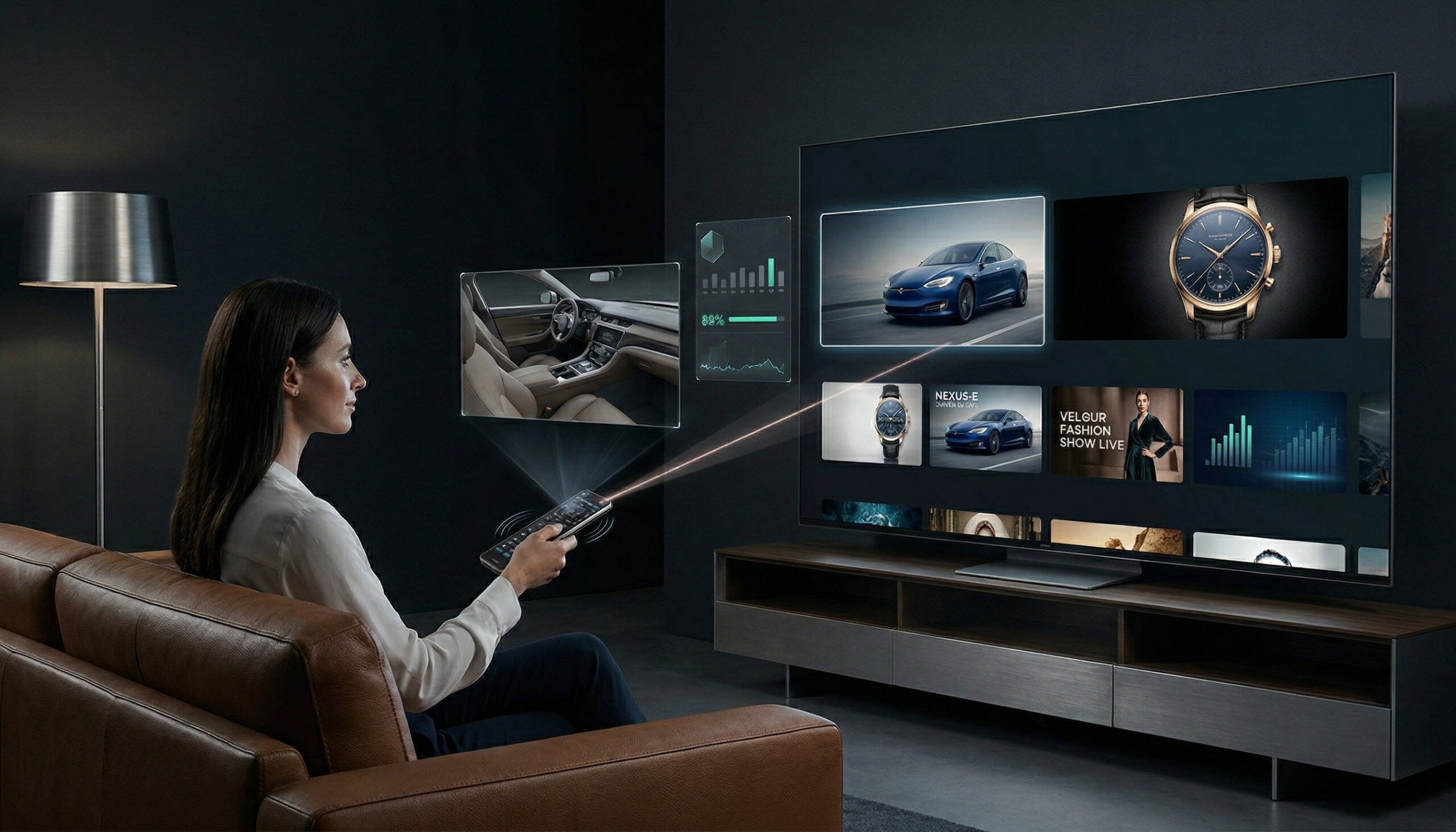
It’s ten-thirty at night. Couch, remote in hand, streaming platform open on screen. I have no idea what I want to watch. I’ve spent eight minutes scrolling through thumbnails, skimming synopses, starting trailers I abandon after twenty seconds. My attention is fully engaged as I graze through the content.
I’ve spent more than a decade in programmatic advertising, and what fascinates me most about this industry is its ability to evolve. We’ve learned to reach users at almost any point in their digital day: context targeting, audience targeting, device targeting, real-time behavioural signals. Almost.
Because there is still a window we haven’t fully understood or leveraged. That moment when the user is choosing what to watch. I call it grazing.
A behaviour with history
The term isn’t new. In Anglo-Saxon academic literature from the nineties, grazing described what we also know as zapping: switching between TV channels without settling on any of them, like sheep grazing in a field. Oxford Reference lists it alongside channel hopping as an established media concept.
What I’m proposing isn’t inventing it, but updating it. Zapping was an escape —fleeing the ad, looking for something more stimulating—. Streaming grazing is an active search. And that difference changes everything.
- LINEAR TV · 80s–90s
Zapping
Reactive channel switching. Fleeing the ad. Content is already playing. - VIDEO ON DEMAND · 2000–2010
Content browsing
Navigation through digital catalogues. The first form of pre-decisional exploration with no time pressure. - STREAMING ERA · 2015–TODAY
Grazing
Continuous exploration across massive catalogues. High attention, high receptivity, low guard. The moment this article examines.
The data behind the couch
The phenomenon has a name in the literature: Netflix Syndrome or choice deferral. Too many options cause paralysis, and decision time has kept growing.
| 18 minutes | 1 in 5 | 90 seconds |
|---|---|---|
| Average time spent choosing what to watch (Reelgood) | Users who give up without watching anything (Nielsen 2023) | Window before losing interest (Netflix) |
To the user, this feels like friction — time slipping away.
But at the same time, they are fully focused: scanning, comparing, filtering options.
A level of attention that doesn’t repeat at any other point in the session.
Grazing is the only moment in the session when the user is available, and nothing competes for their attention.
An opportunity in the media plan
When reviewing streaming media plans, the conversation usually ends in the same place: pre-roll, mid-roll, ad breaks. All those formats have one thing in common: the user has already chosen. They’re already watching. Their attention is split between content and message.
Grazing happens before. A user in grazing mode is building preferences in real time, is receptive, has their guard down. For decades, the industry has been buying attention during consumption.
Grazing is the attention before content even begins.
| THE NUMBER THAT SAYS IT ALL 72% of consumers say that the content surrounding an ad influences their perception of that ad. In grazing, that “surrounding content” is the user’s own consumption intent. No context could be more relevant. |
There’s an analogy that works very well here: the cinema box office. Before buying a ticket, the viewer reads posters, checks synopses, talks to whoever they’re with. That moment in the lobby has a well-developed advertising equivalent: posters, promotional screens, recommendations. Nobody calls it dead time. It’s the moment of greatest receptivity to influence.
In streaming, that lobby exists. It’s called grazing.
What about programmatic CTV?
There are signs of movement. Programmatic video investment will exceed 10 billion in 2025, with Connected TV as the driving force. Advanced language models already allow audiovisual content to be analysed at scene level, enabling high-precision contextual targeting.
That capability has a direct application in grazing. If a platform understands what a user is exploring in real time, brands can deliver messages that align with that emerging interest — not interrupting content but accompanying intent while it is still forming. That’s the next frontier.
To close
That night on the couch, after eighteen minutes browsing catalogues, I ended up watching something I’d already seen. Like the 40% of users who do the same when decision fatigue wins the round.
In advertising, the biggest leaps in value have always come from recognising a behaviour that was already there, just not clearly named. The scroll. The second screen. Attention itself.
Grazing sits in that same place. The name already exists. What comes next is what we do with it.

2 articles published on the Relevant Group blog.